

Rooftop & Leading Edge Fall Protection
Protection for Roof Edges, Openings, and Changing Work Areas
Rooftop work can expose employees to fall hazards while servicing HVAC equipment, solar arrays, communications equipment, roof drains, access points, and other building systems. Construction and roofing projects create additional challenges when exposed edges move as work progresses.
CH Bull can evaluate the roof layout, work being performed, access frequency, supporting structure, and worker travel requirements to help identify an appropriate guardrail, lifeline, warning line, or controlled-access solution.
Planning Ahead: Incorporating fall protection during building design or construction can simplify installation, help protect the roofing system, and provide a long-term solution. Existing buildings can also be upgraded using non-penetrating and roof-specific systems designed to minimize disruption to the roof membrane.

Compare Rooftop & Leading-Edge Fall Protection Solutions
Compare guardrail, rooftop lifeline, warning line, and controlled-access solutions based on the location of the hazard, required worker movement, roof construction, and whether conditions are permanent or changing. Construction and roofing projects with moving exposed edges may require temporary guardrails, horizontal lifelines, safety nets, or other systems that can adapt as work progresses.
Guardrail Systems
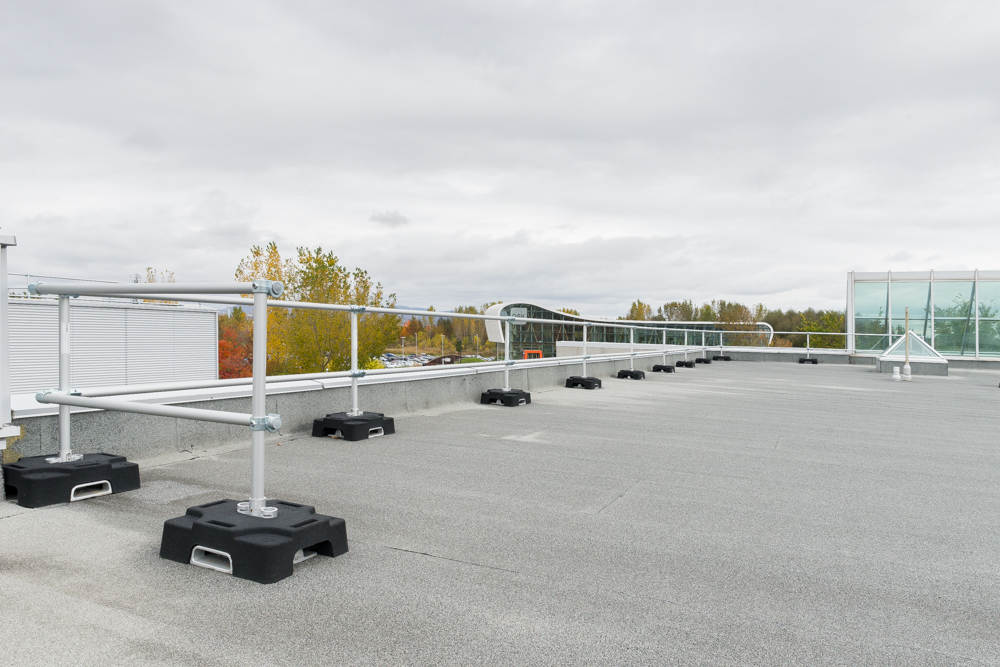
Best For: Roof edges, openings, equipment areas, and designated work zones requiring continuous passive protection.
Highlights:
- Protects workers without requiring tie-off
- Permanent and modular configurations
- Penetrating and non-penetrating options
- Parapet- and roof-mounted systems
- Can be configured around equipment and access points
Warning Line & Controlled-Access Systems
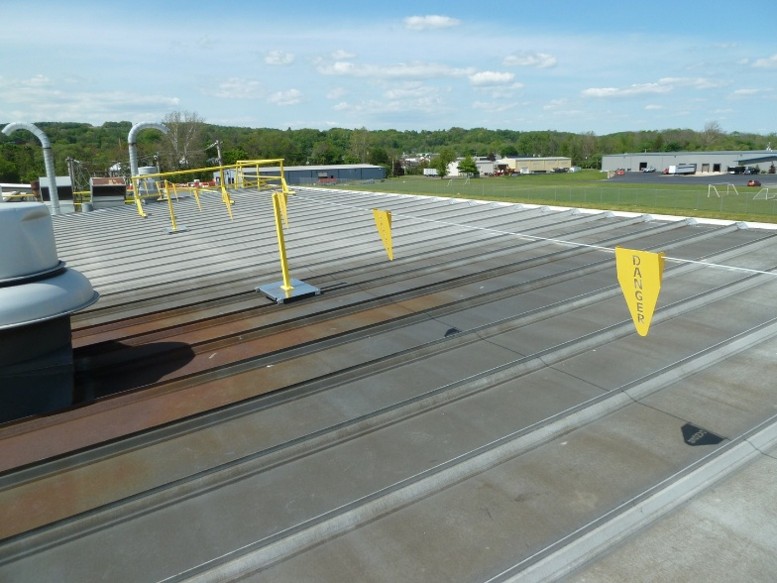
Best For: Large roof areas where routine work can be organized within a designated zone set back from exposed edges.
Highlights:
- Defines designated work boundaries
- Portable and reconfigurable
- Useful for temporary or infrequent work
- Supports planned maintenance routes
- Can be combined with additional protection near hazards
Rooftop Lifeline Systems
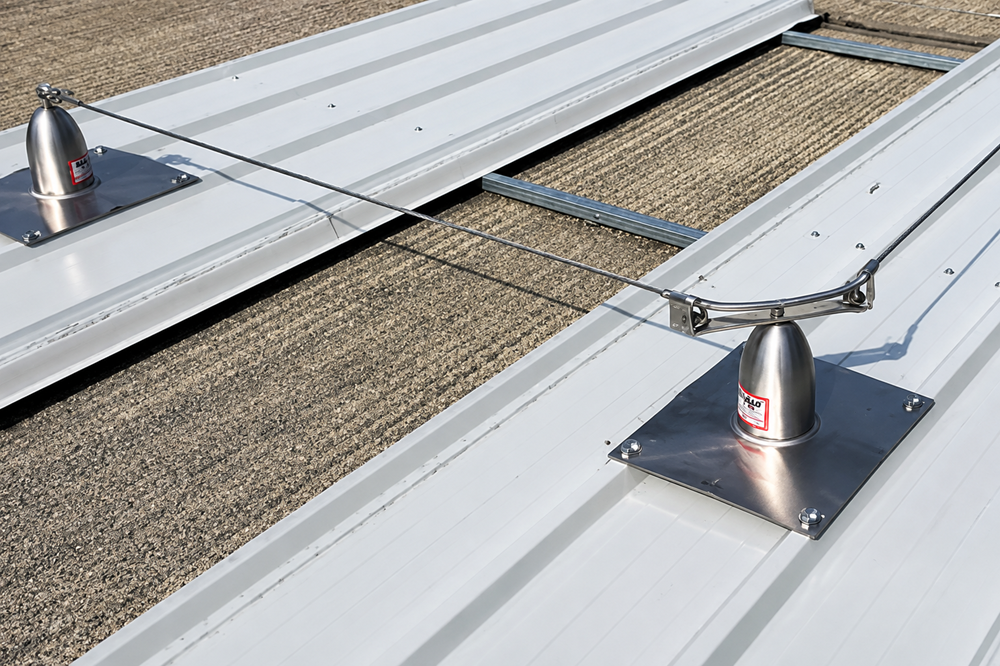
Best For: Rooftops where workers need greater mobility and permanent guardrails are not practical throughout the work area.
Highlights:
- Engineered horizontal lifeline and anchor systems
- Can be configured for restraint or arrest
- Supports movement across defined roof areas
- Roof-specific attachment options available
- Requires compatible personal fall protection
- Fall-arrest designs require clearance and rescue planning
Not sure which approach fits your rooftop?
CH Bull can review the roof layout, work zone, access requirements, and frequency of use to help narrow the options.
Planning for New and Existing Roofs
The installation approach depends heavily on whether fall protection is incorporated into the original building design or added to an existing roof.
New Construction Integration

Best For: Architects, engineers, contractors, and owners planning permanent rooftop access.
Highlights:
- Integrates protection into the building design
- Coordinates attachment points with the structure
- Helps preserve roofing and waterproofing systems
- Reduces future retrofit requirements
Existing Roof Retrofits

Best For: Completed buildings that need improved protection without extensive roof modifications.
Highlights:
- Non-penetrating counterweighted systems
- Parapet-clamp configurations
- Standing-seam roof options
- Can be installed around existing equipment
- Helps minimize roof-membrane penetrations
Rooftop systems should be selected with the roof membrane, supporting structure, worker movement, maintenance requirements, and future access needs in mind.
Choosing the Right Level of Fall Protection
Start with solutions that eliminate or physically block the hazard. When those options are not practical, use fall restraint before fall arrest, with administrative controls supporting the overall plan.
Eliminate the Hazard
Relocate equipment or change the work process so employees do not need to enter the fall-hazard area.
Passive Protection
Install guardrails, covers, or platforms that protect workers without requiring personal tie-off equipment.
Fall Restraint
Limit worker travel so the person cannot reach the roof edge, opening, or another fall hazard, helping prevent a fall from occurring.
Fall Arrest
Stop a fall after it begins. Adequate clearance, compatible equipment, and a practical rescue plan are required.
Administrative Controls
Use warning lines, controlled-access zones, training, and procedures to manage designated work areas.
Rooftop Fall Protection Comparison Guide
Use this guide to compare the primary approaches for rooftop work.
| Solution | Protection Approach | Best For | Key Considerations |
|---|---|---|---|
| Guardrail Systems | Passive protection | Roof edges, openings, and frequently accessed areas | Protects workers without requiring personal tie-off |
| Rooftop Lifeline, Restraint | Active fall restraint | Roofs requiring worker mobility near hazards | Must prevent the worker from reaching the edge |
| Rooftop Lifeline, Arrest | Active fall arrest | Work requiring access where a fall could occur | Requires adequate clearance, engineered anchors, and rescue planning |
| Warning Line or Controlled Access | Administrative boundary | Designated work zones away from exposed edges | Does not provide the same physical barrier as a guardrail |
The right system depends on more than the initial equipment cost.
Roof construction, attachment requirements, membrane protection, worker movement, installation labor, inspection needs, and future maintenance access can all affect the total project.
Leading-edge work may use temporary versions of these systems or another engineered solution that can adapt as construction progresses.
Common Questions
Plan a Safer Rooftop
The right rooftop fall protection system depends on the roof, work area, access requirements, worker movement, and whether the hazard is permanent or changing. CH Bull can assess the application and help develop a practical solution for new construction or an existing facility.