
Overhead Fall Protection Systems
Engineered Protection for Industrial Work at Height
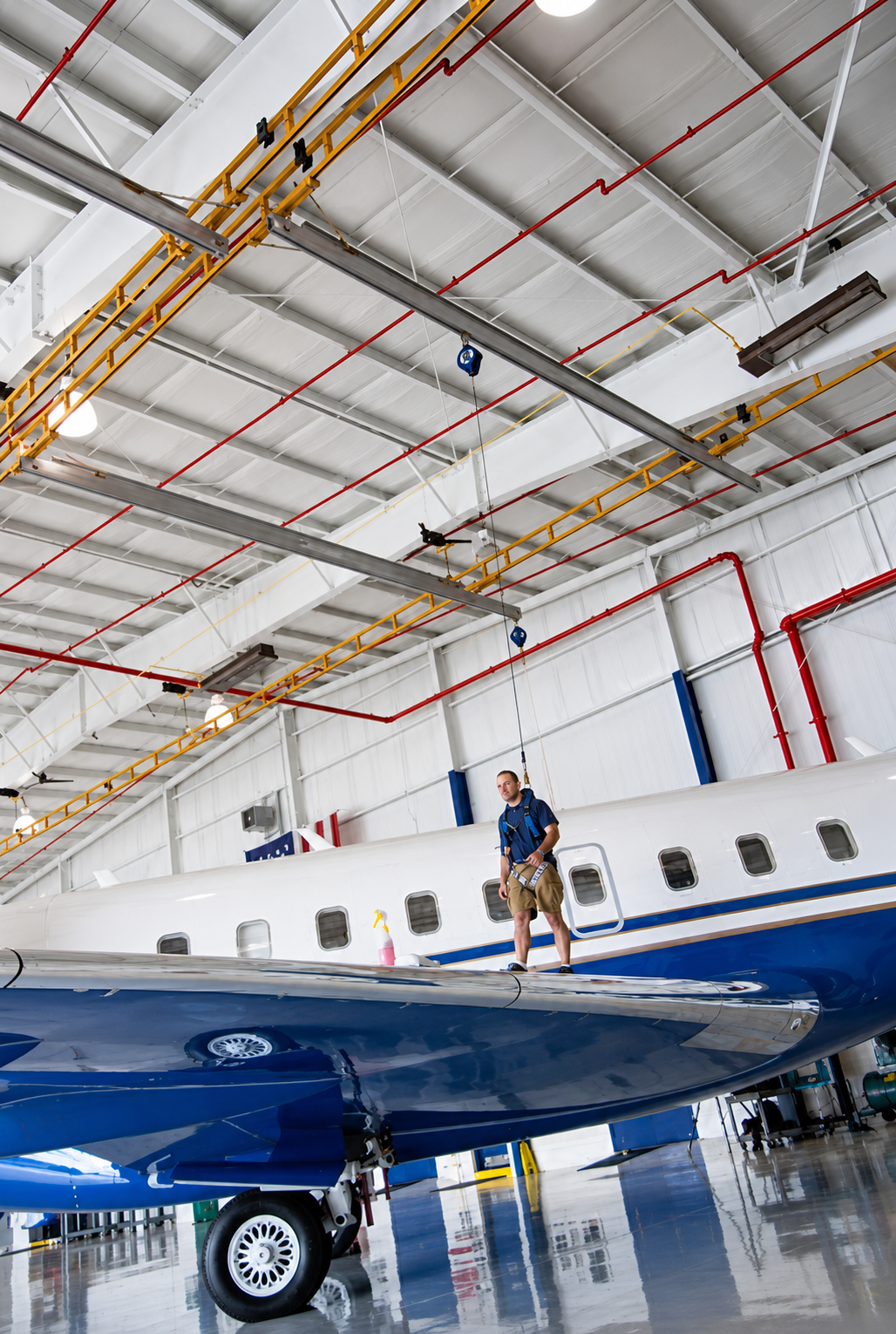
Overhead fall protection systems provide an engineered connection above workers who need to move across vehicles, equipment, loading areas and elevated maintenance workspaces. Keeping the connection overhead can reduce free-fall distance, limit swing-fall exposure and keep lifelines away from equipment and walking surfaces.
CH Bull can evaluate the work area, supporting structure, required travel path and available fall clearance to help determine whether a rigid rail or horizontal lifeline system is appropriate.
Engineering Matters: The building or independent support structure becomes part of the fall protection system. Worker movement, number of users, structural loads, fall clearance and rescue requirements must all be considered before a system is selected.
Compare Overhead Fall Protection Solutions
Compare rigid rail and horizontal lifeline systems based on worker movement, required coverage, supporting structure and available fall clearance.
Rigid Rail Systems
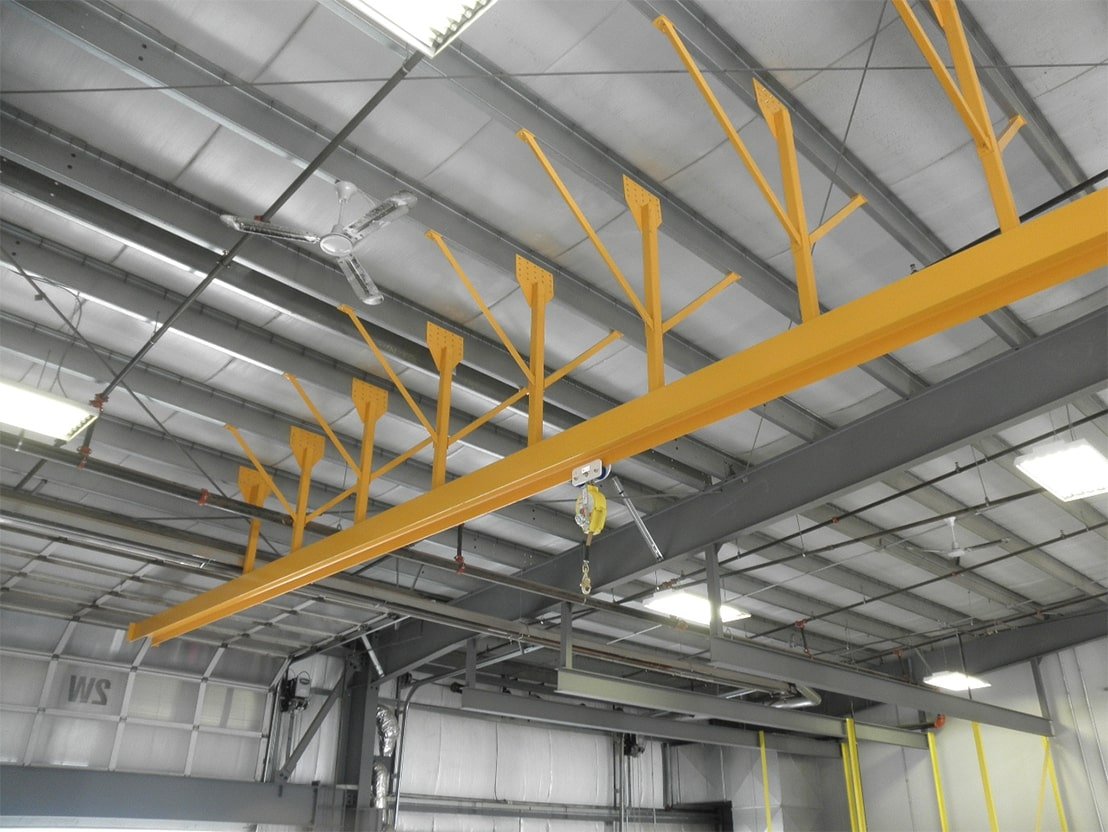
Best For: Frequently used manufacturing, maintenance, loading and vehicle-service areas requiring smooth worker movement and minimal system deflection.
Highlights:
- Rigid aluminum or steel track
- Low-friction trolley follows the worker
- Minimal system deflection
- Generally requires less fall clearance
- Reduced swing-fall potential
Horizontal Lifeline Systems
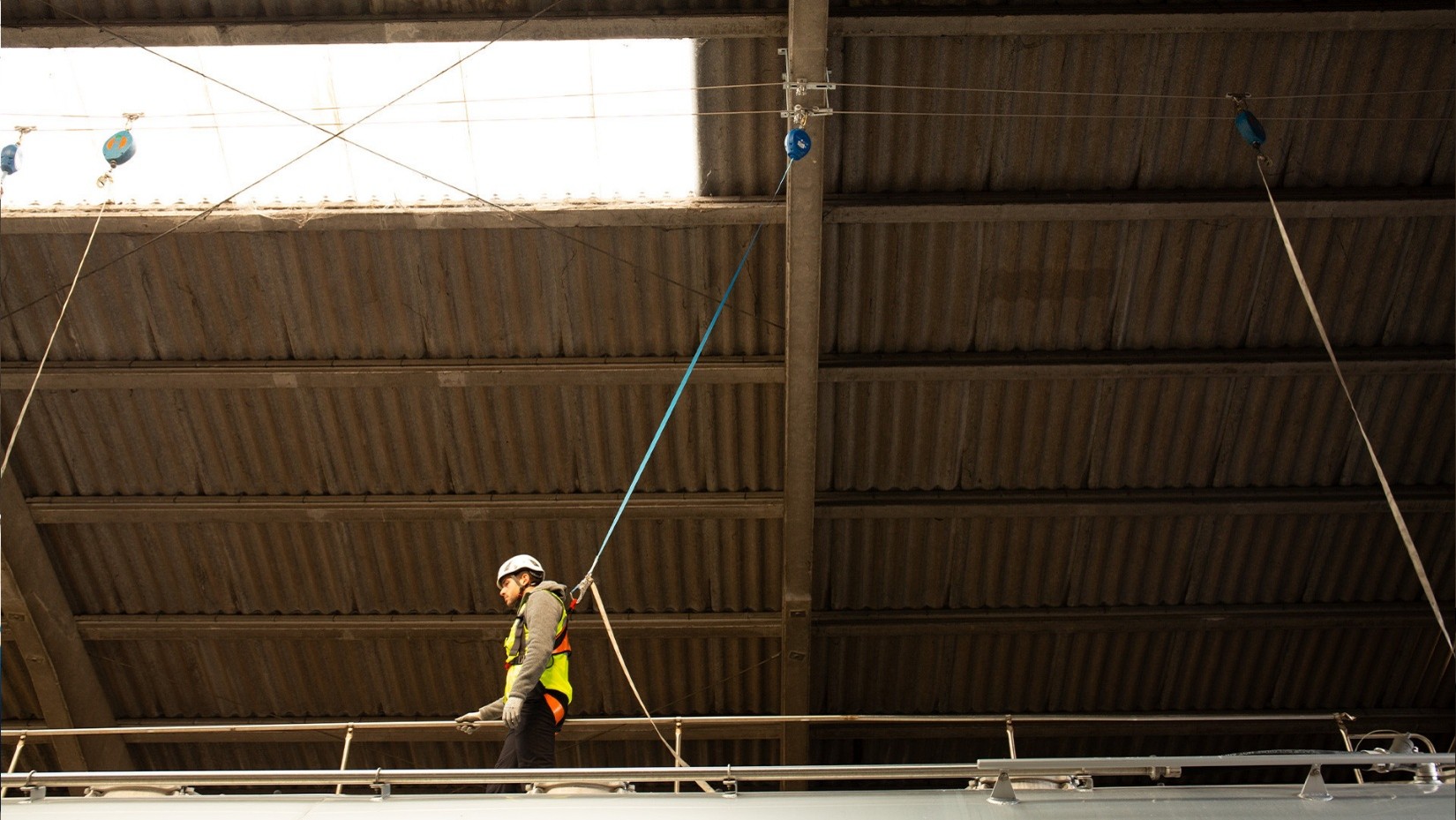
Best For: Long linear routes such as catwalks, loading areas and maintenance paths where a flexible layout is needed.
Highlights:
- Cable or rope between engineered anchors
- Permanent and temporary options
- Flexible coverage for extended travel
- Greater deflection and clearance requirements
- End-anchor loads must be engineered
Not sure which system fits your work area?
CH Bull can review the required travel path, supporting structure, number of users and available fall clearance to help narrow the options.
Rigid Rail vs Horizontal Lifeline
Use this guide to understand the primary engineering differences between the two system types.
| Consideration | Rigid Rail System | Horizontal Lifeline |
|---|---|---|
| System deflection | Minimal | Greater because the cable stretches during a fall |
| Fall clearance | Generally lower | Generally higher |
| Load behavior | Loads transfer through the rail and supports | Significant forces can develop at the end anchors |
| Structural modifications | May require less reinforcement, depending on the structure | May require reinforcement or independent support steel |
| Worker coverage | Continuous along the rail or bridge layout | Depends on the cable and anchor arrangement |
| Installed project cost | Often more predictable after the support method is established | Can increase because of engineering and reinforcement requirements |
| Best suited for | Frequent-use industrial work areas | Long linear routes with sufficient clearance and suitable anchor support |
The lowest equipment price does not always produce the lowest installed project cost.
A cable system may appear simpler initially, but structural reinforcement, engineered support steel, installation labor and additional clearance requirements can substantially affect the final project. The source specifically identifies cable deflection and end-anchor loading as important engineering considerations.
Common System Configurations
Rigid rail and horizontal lifeline systems can be arranged and supported in different ways based on the work area.
Monorail Systems

Best For: Work that follows a defined path above vehicles, equipment or production areas.
Highlights:
- Single overhead travel path
- Compact system layout
- Continuous connection along the route
- Suited to repetitive maintenance tasks
- Common above trucks, conveyors and equipment
Bridge Systems
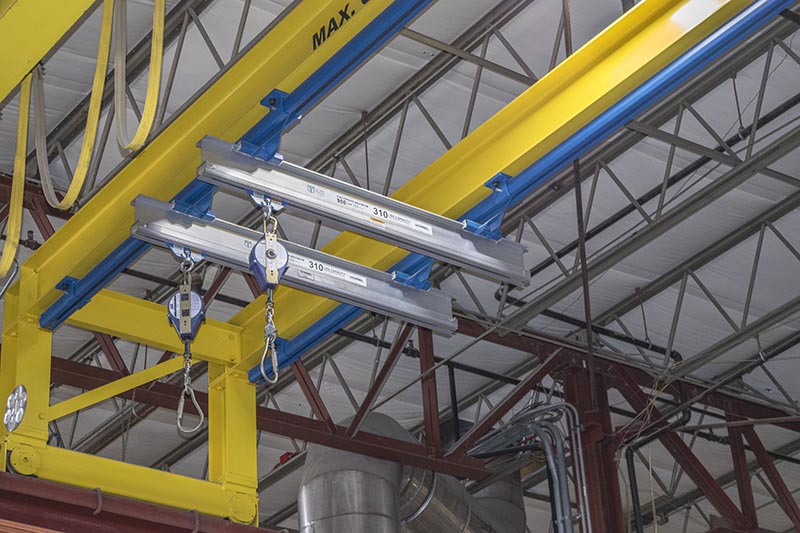
Best For: Large rectangular workspaces requiring broad coverage and flexible worker movement.
Highlights:
- Parallel runways support a moving bridge
- Trolley travels along the bridge
- Broad coverage across the work area
- Minimal need to disconnect
- Multiple-user designs may be available
Freestanding Support Systems

Best For: Facilities where the existing building cannot support the required system loads.
Highlights:
- Independent engineered support structure
- Avoids loading the existing roof structure
- Can support rigid rail or lifeline systems
- Relocatable options may be available
Monorail and bridge systems define how workers move through the protected area. Freestanding systems provide independent support when the building cannot carry the required loads.
Choosing the Right Level of Fall Protection
The preferred approach is to remove the fall hazard or prevent workers from reaching it. When those options are not practical, an engineered overhead system may provide fall restraint or fall arrest.
Eliminate the Hazard
Change the process, equipment location or access method so workers do not need to enter the fall-hazard area.
Use Passive Protection
Use guardrails, covers, platforms or other barriers that protect workers without requiring them to connect equipment.
Use Fall Restraint
Limit worker travel so the person cannot reach the fall hazard. Use restraint when the work can be completed without exposure to an edge.
Use Fall Arrest
Allow access while using a system designed to stop a fall. Adequate clearance and a practical rescue plan are required.
Common Questions
Tools & Resources
Documents
No resources found.
Videos
Related Resources
No posts
Plan Your Overhead Fall Protection System
The right overhead fall protection system depends on the work, supporting structure, required movement and available clearance. CH Bull can assess the application and help develop a solution that supports safer, more efficient work at height.