
Guardrail Systems
Passive Fall Protection for Rooftops and Elevated Work Areas
Guardrail systems create a physical barrier between workers and exposed edges. Because the protection is already in place, workers can move through the protected area without relying solely on harnesses, lanyards or individual tie-off procedures.
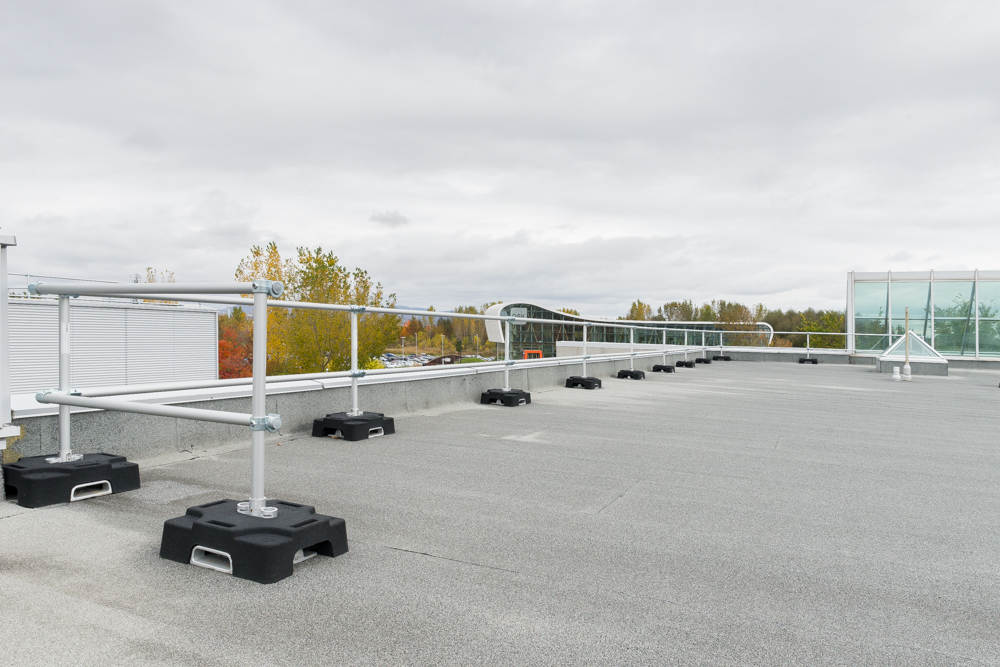
CH Bull provides permanent and non-penetrating guardrail solutions for roof perimeters, access routes, mechanical equipment areas, platforms, roof hatches and other elevated work areas.
Compare Guardrail Systems
Guardrail systems vary by mounting method, construction and appearance. Compare the featured options below, or contact CH Bull for help evaluating your facility.
kattsafe guardrail systems

Best For: Facilities requiring a system matched to the roof type or mounting condition.
Highlights:
- Non-penetrating and permanently mounted options
- Lightweight aluminum construction
- Multiple roof and wall mounting configurations
- Modular layouts for perimeters and access areas
Garlock RailGuard 200™

Best For: Flexible rooftop protection for temporary or permanent applications.
Highlights:
- Non-penetrating weighted-base design
- Tool-free modular assembly
- Temporary or permanent installation
- Galvanized or safety-yellow finishes
Tractel SafetyRail 2000

Best For: Standard industrial rooftop perimeter protection.
Highlights:
- Non-penetrating weighted-base system
- Modular perimeter configurations
- Temporary or permanent use
- Designed for industrial rooftops and elevated work areas
Tractel SafetyRail 2000 Architectural Series
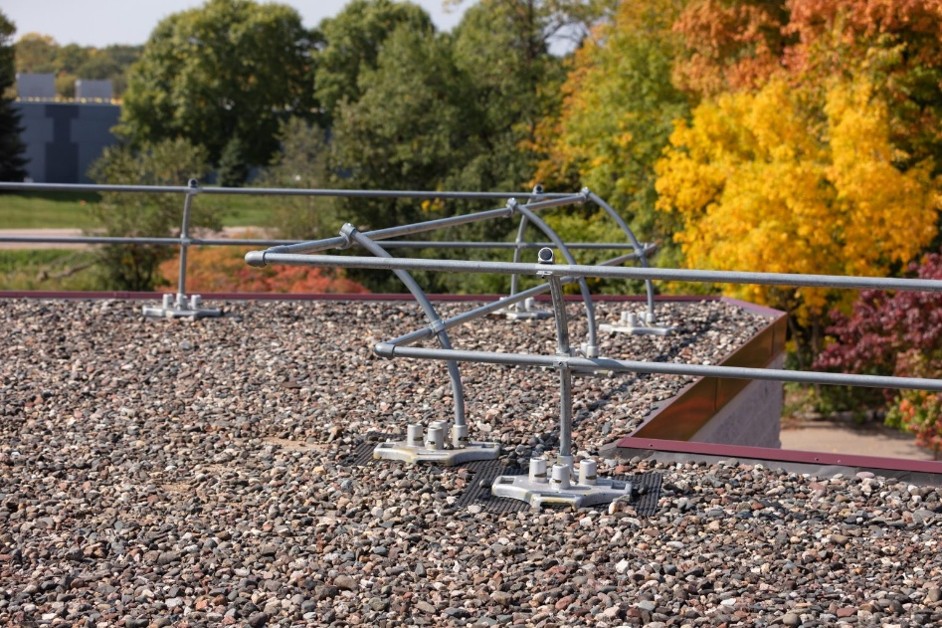
Best For: Rooftop protection where appearance and sightlines are important.
Highlights:
- Non-penetrating installation
- Straight, inclined and curved post options
- More refined architectural appearance
- Designed for highly visible rooftops
Delta Prevention vss Classic Guardrail
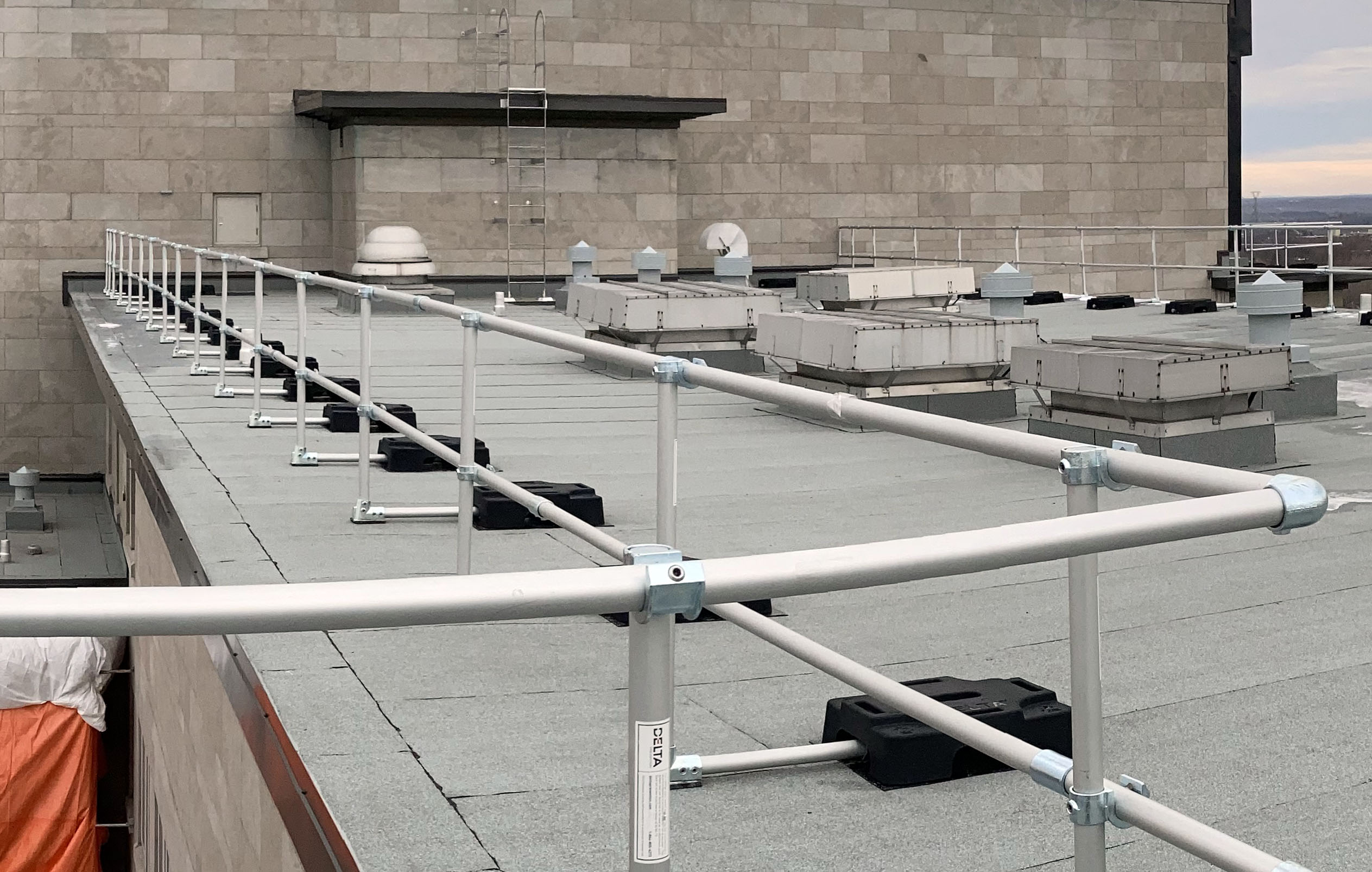
Best For: Open rooftops and long, straight perimeter runs requiring permanent fall protection.
Highlights:
- Freestanding, non-penetrating design
- Linear guardrail configuration
- Lightweight aluminum construction
- Suitable for partial or full rooftop perimeter protection
- No full-height end return required
Delta Prevention vss Compact Guardrail

Best For: Rooftops with limited space between equipment, protected areas and the roof edge.
Highlights:
- Freestanding, non-penetrating design
- Reduced-footprint configuration
- Designed for confined rooftop layouts
- Lightweight aluminum construction
- Shorter return sections than traditional configurations
Not sure which guardrail system fits your facility?
Tell us about the roof, exposed edges, access points and work being performed. CH Bull can help determine which system and configuration should be considered.
Why Guardrails Are Effective
Guardrails help prevent a fall from occurring rather than relying on equipment to stop a worker after a fall has begun. As a passive system, they provide protection whenever workers are within the guarded area.
Continuous Protection
The physical barrier remains in place whenever the rooftop or elevated area is accessed.
Fewer Tie-Off Requirements
Workers who remain behind a properly installed guardrail can often perform their work without connecting to an individual anchor.
Protection for Multiple Workers
A guardrail can protect everyone within the guarded area at the same time.
Less Reliance on Worker Action
Protection does not depend on each worker remembering to wear a harness, inspect equipment or connect a lanyard before approaching the edge.
Quick Comparison Guide
Compare the mounting styles, applications and key features of each guardrail system.
| Solution | Mounting Style | Best For | Key Difference |
| Kattsafe Guardrail Systems | Weighted, surface, wall or metal-roof mounting options | Facilities with varying roof types and mounting needs | Broad selection of aluminum guardrail configurations |
| Garlock RailGuard 200 | Freestanding weighted-base system | Temporary or permanent rooftop protection | Tool-free modular steel system |
| Tractel SafetyRail 2000 | Freestanding weighted-base system | Industrial roof edges and elevated work areas | Straightforward modular perimeter |
| Tractel Architectural Series | Freestanding weighted-base system | Highly visible rooftops and architectural applications | More refined appearance and sightlines |
| Delta Prevention VSS Classic Guardrail | Freestanding, weighted-base aluminum system | Open rooftops and long perimeter runs | Anodized aluminum, modular non-penetrating system for linear perimeter protection |
| Delta Prevention VSS Compact Guardrail | Freestanding, weighted-base aluminum system | Tight rooftops and areas near equipment | Anodized aluminum, modular non-penetrating system with a reduced rooftop footprint |
Need help evaluating an existing rooftop or elevated work area?
CH Bull can review the roof conditions, access points, exposed edges and work requirements to help identify an appropriate guardrail configuration.
Common Questions
Tools & Resources
Videos
Related Resources
No posts
Protect Workers at the Edge
The right guardrail system depends on the roof, access route, work area and surrounding conditions. CH Bull can assess the application and help identify a practical passive fall-protection solution.