
Angled Fixed Ladders
Easier Climbing Access for Roofs, Platforms, and Equipment Areas
Angled fixed ladders, often referred to as ship ladders, provide a more comfortable climbing angle than a straight vertical ladder while using less space than a full stair system. They are commonly used for rooftop access, equipment platforms, mezzanines, and maintenance areas where workers need safer, more practical access between elevations.
Safety note: Angled ladders can make access easier, but the safest solution depends on the landing conditions, roof edge exposure, available space, and how workers step on and off the ladder. CH Bull can help evaluate the full access point, not just the ladder.

Compare Angled Fixed Ladder Options
Compare angled ladder systems designed for safer, more comfortable access to roofs, platforms, equipment, and elevated work areas.
Kattsafe RL20-RL25 Angled Fixed Ladders
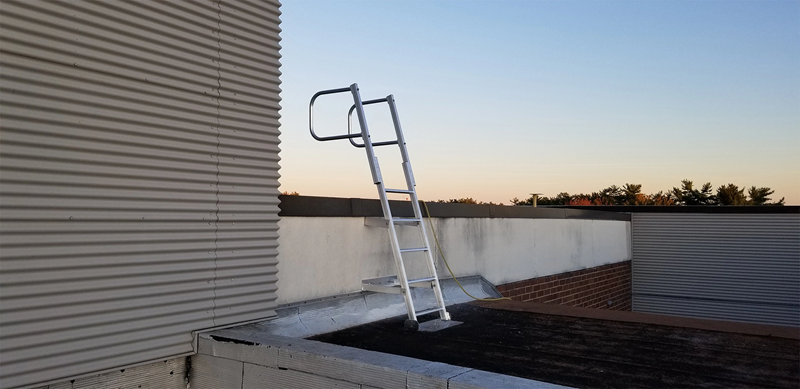
Best For: Rooftop-to-rooftop access, loading dock access, and shorter elevation changes.
Highlights:
- Fixed 75-degree angle
- Aluminum construction
- Used for heights up to 16 ft.
- Grab rail and platform options
- Designed for OSHA compliance
ErectaStep angled ship ladders

Best For: Industrial access where stairs take up too much space.
Highlights:
- Aluminum construction
- Prefabricated modular design
- OSHA-compliant configuration options
- Bolt-together installation
- Good fit for maintenance platforms
- Powder-coated handrails
Wildeck angled ship ladders
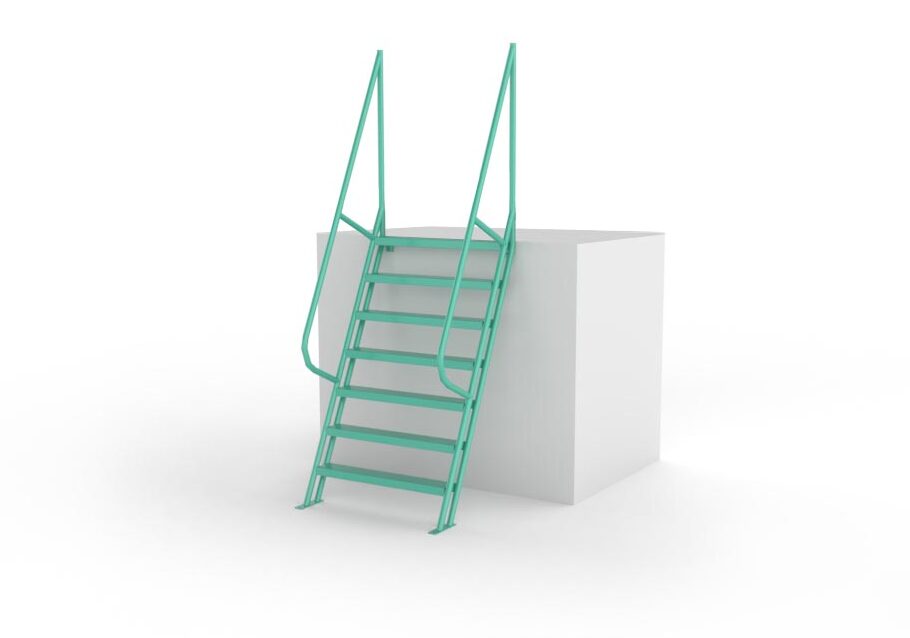
Best For: Heavy-duty industrial platform and facility access.
Highlights:
- Welded steel construction
- 65° to 75° angle options
- Diamond plate steps
- Optional safety grate treads
- Hot-dip galvanized option
Not sure which angled ladder fits your facility?
Tell us the access height, available floor space, landing conditions, and how often the ladder will be used. We’ll help you choose the right option.
How to Choose an Angled Fixed Ladder
The right angled ladder depends on the climb height, available space, frequency of use, and how workers will step on and off the ladder.
Climbing Angle
Angled ladders are easier to climb than vertical ladders, but the angle must match the application and available space.
Available Space
Ship ladders require more room than vertical ladders but less space than a standard stair system.
Access Height
Shorter roof, platform, and equipment access points may be good candidates for angled ladder systems.
Landing Safety
The top and bottom landing areas should provide enough clearance, handholds, and protection for safe access.
Quick Comparison Guide
Use this table as a starting point to compare angled fixed ladder options. CH Bull can help confirm which system fits your access height, available space, and safety requirements.
| Solution | Best For | Material | Best-Fit Application |
|---|---|---|---|
| Kattsafe RL20 | Rooftop access, loading dock access, and shorter elevation changes | Aluminum | Shorter elevation changes |
| ErectaStep Ship Ladder | Tight industrial access and maintenance platforms | Aluminum | Modular access where stairs do not fit |
| Wildeck Ship Ladder | Heavy-traffic areas, daily use, and fabricated work platforms | Steel | Heavy-duty industrial access |
Need help evaluating an angled ladder application?
CH Bull can assess access height, floor space, landing conditions, and safety requirements to recommend the right ladder system.
Common Questions
Tools & Resources
Videos
No resources found.
Related Resources
No posts
Safer Access Starts With the Right Angle
An angled fixed ladder can make elevated access easier, but the safest solution depends on the climb height, available space, landing conditions, and how often workers use the ladder. CH Bull can help evaluate your access point and recommend the right ladder system for your facility.