

Warning Line Systems
Visible Rooftop Hazard Boundaries
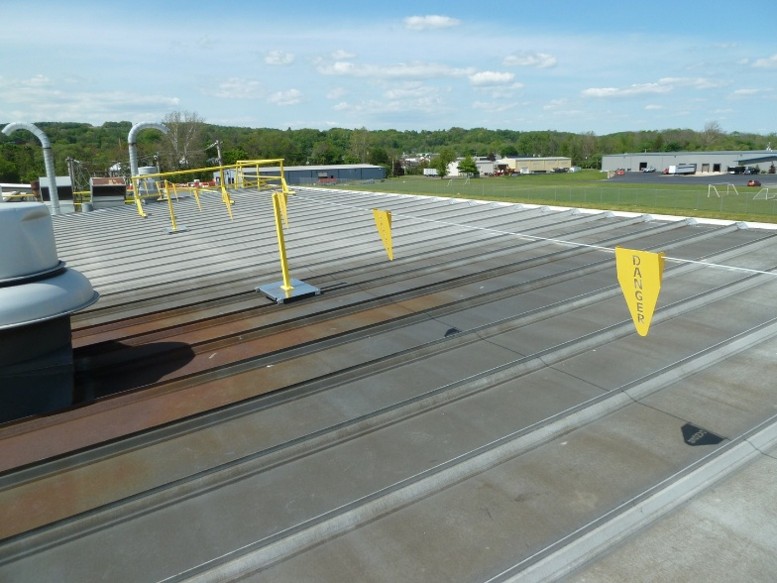
Warning line systems create a highly visible boundary around rooftop work areas, alerting workers as they approach an unprotected edge or restricted zone. They help establish designated work areas while keeping workers aware of nearby fall hazards.
A warning line is a visual warning, not a system designed to stop a fall. When work requires crossing the boundary or entering an exposed area, additional fall protection may be required.
Compare Warning Line Systems
Compare warning line options based on roof type, mounting method and long-term use.
Kattsafe Warning Line Systems

Best For: Facilities requiring a warning line matched to the roof type and mounting conditions.
Highlights:
- WL31 for metal and standing-seam roofs
- Rivet and non-penetrating seam-clamp mounting options
- WL32 and WL33 for membrane and built-up roofs
- Weighted, non-penetrating base configurations
- High-visibility yellow posts and warning pennants
- Customizable layouts for roof perimeters and equipment areas
Tractel Perma-Line

Best For: Permanent visual boundaries and controlled rooftop access zones.
Highlights:
- Non-penetrating installation
- Designed for long-term rooftop use
- Vinyl-coated aircraft cable
- Pivoting, high-visibility metal flags
- Yellow powder-coated or galvanized finishes
- Suitable for controlled-access and non-serviceable roof areas
Delta Prevention VSS SafetyLine
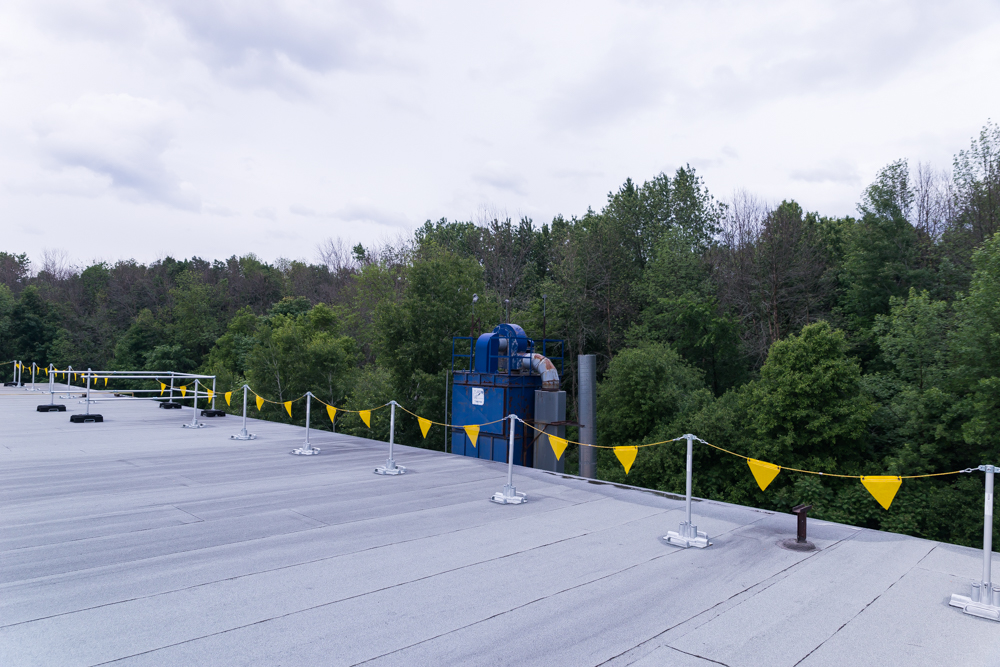
Best For: Facilities seeking a permanent, non-penetrating warning line that can adapt to future rooftop safety needs.
Highlights:
- Freestanding, non-penetrating installation
- High-visibility yellow flags
- Corrosion-resistant aluminum posts
- Durable recycled-rubber weighted bases
- Converts to a Delta Prevention guardrail using shared components
- 10-year warranty
Not sure which warning line system fits your roof?
CH Bull can review the roof type, access points, work areas and mounting requirements to help identify the right system and layout.
Quick Comparison Guide
Use this guide to compare mounting options, typical applications and the key differences between each warning line system.
| System | Mounting Options | Best For | Key Difference |
|---|---|---|---|
| Kattsafe Warning Line Systems | Rivets, standing-seam clamps or weighted bases | Metal, membrane and built-up roofs | Multiple configurations matched to the roof type |
| Tractel Perma-Line | Non-penetrating weighted system | Permanent controlled-access zones | Designed to remain in place for ongoing use |
| Delta Prevention VSS SafetyLine | Freestanding weighted-base system | Permanent rooftop hazard boundaries with future expansion flexibility | Can be converted into a guardrail system using shared components |
Need help planning a rooftop warning area?
CH Bull can evaluate roof access, work zones, exposed edges and installation conditions to help plan the system layout.
Common Questions
Tools & Resources
Videos
Related Resources
No posts
Define a Safer Work Area
A properly planned warning line system helps workers recognize rooftop hazards and remain within designated work areas. CH Bull can help select a system based on the roof, access points, work activity and installation requirements.